The Long Game: Social & Political Maneuvering
How influence is quietly accumulated, and how status is quietly lowered. None of the patterns below are a diagnosis of any person, they describe behaviors that, in a repeated pattern, are consistent with organizational tactics documented in psychology and management research. Naming a pattern is not the same as naming a person.
24 entries in this category.

Backhanded Framing / Micropositioning
A compliment shaped like praise but built to quietly rank you below someone, including the speaker.
Read the entry →
Covert Signaling
Contempt delivered through eye-rolls, sighs, and smirks, deniable, repeated, and status-lowering.
Read the entry →
Kiss-Up, Kick-Down
Charming upward, cruel downward, the boss and the subordinate experience two different people.
Read the entry →
Triangulation
Every message about you routed through someone else, never straight to you.
Read the entry →
Coalition-Building / Mobbing
A private grievance becomes a group campaign, and the target is outnumbered before they know there's a fight.
Read the entry →
Weaponized Networking & Productivity/Visibility Theater
Manufactured rapport for influence, paired with manufactured busyness to justify a role that produces little.
Read the entry →
Social Undermining
A slow-drip pattern of small, deniable acts, a delayed email here, a withheld introduction there, engineered to erode your reputation, your relationships, and your ability to succeed at work.
Read the entry →
Workplace Ostracism / Social Exclusion
Being left off the invite, out of the loop, and out of the room, not through any single confrontation, but through quiet, repeated omission.
Read the entry →
Culture of Fear
Not one bad interaction but the whole climate: an unspoken rule that raising a problem, disagreeing, or admitting a mistake gets you punished, so everyone quietly stops doing it.
Read the entry →
Knowledge Hiding / Information Hoarding
Deliberately withholding information, documentation, or access a colleague needs to do their job, kept as leverage rather than shared as expertise.
Read the entry →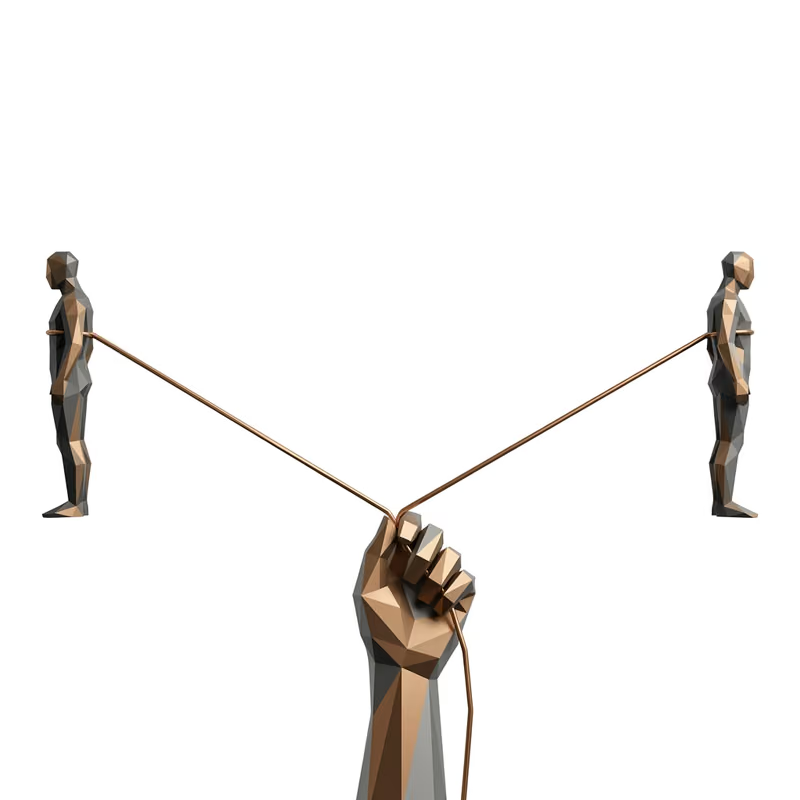
Divide and Conquer
Deliberately sowing rivalry or distrust between colleagues so they never compare notes, unite, or notice the same pattern is happening to more than one of them.
Read the entry →
Constructive Dismissal
Making working conditions so intolerable that an employee resigns, letting the employer avoid the cost, process, and liability of a formal termination.
Read the entry →
Sandbagging
Deliberately holding back real output or ability, so a later, unremarkable effort looks like a leap forward and no one raises the bar on you.
Read the entry →
The Glass Cliff
You get the promotion, but only because the ship is already sinking, and when it sinks further, the sinking becomes yours.
Read the entry →
Office Housework
Someone has to take the notes, plan the party, and onboard the new hire, and it is never assigned to the person whose calendar has room for "real work."
Read the entry →
The Meeting After the Meeting
The real decision already happened in the hallway; the meeting on the calendar is just where everyone pretends it is being made.
Read the entry →
The Degradation Ceremony
Reputational groundwork laid quietly in advance, then cashed in at a single staged public moment designed to permanently redefine how the group sees the target.
Read the entry →
Scapegoating
One person is habitually, repeatedly blamed for group or systemic failures regardless of actual responsibility, becoming the team's fixed "problem."
Read the entry →
The Golden Child (workplace favoritism)
A manager elevates one team member into an untouchable favorite, protected from criticism and sometimes used to police or inform on everyone else.
Read the entry →
Persian Messenger Syndrome
Punishing whoever delivers the bad news, so the news itself quietly stops arriving.
Read the entry →
Group Gaslighting / Manufactured (False) Consensus
A room acts as though the target did something wrong without ever naming what, "everyone thinks so", until the target doubts themselves.
Read the entry →
The Lone Aggressor
One person can run the same sustained campaign a coalition does, and it does just as much damage without ever needing a group.
Read the entry →
Flying Monkeys
A colleague with a bottomless need for approval becomes someone else's weapon, exploited themselves, and aimed at you.
Read the entry →The Toxic Alliance
Two people who already run these tactics recognize each other, stop competing, and start trading cover, favors, and targets.
Read the entry →