Where It Begins
Where the patterns come from. No one is born cruel, and no one lands in a position of power already needing to destroy the person who notices their insecurity. The profiles and tactics in the rest of this guide grow from somewhere, usually from a childhood in which safety, steady attention, or a parent's respect was missing, and the missing piece got built around instead of healed. This is the causal layer underneath everything else on the site. It is here not to excuse the adult behavior, understanding an origin never obligates you to absorb the harm, but to explain it, so that what once felt personal and bewildering starts to make a different kind of sense. The journey actually starts here.
A note on all eight entries: none of this is a way to diagnose the childhood of a real person, you cannot know their history, and most people who were wounded early cause no one harm. These are origins, not verdicts. They are here to explain where the patterns in the rest of this guide come from, so that what you experienced feels less like a mystery and less like your fault, while leaving your right to protect yourself completely intact. Understanding the root of a behavior never obligates you to keep standing under the tree.
8 entries in this category.

Narcissistic Rage and the Fragile Self
The child who was never reliably mirrored builds a self that looks solid and isn't, and reacts to anyone who exposes the crack with a fury out of all proportion to the moment.
Read the entry →
Father Hunger
A father who was absent, unavailable, or never truly engaged leaves a specific developmental gap that the adult keeps trying to fill, often through status, and defends with aggression.
Read the entry →
The Good-Enough Mother and the False Self
When early care is unreliable or intrusive, the child hides the real self away and sends a compliant, performed self out to survive, and the performance can last a lifetime.
Read the entry →
Basic Anxiety and the Search for Safety
A childhood short on warmth and safety leaves a deep background dread, and the child locks in one lifelong strategy to manage it: cling, dominate, or withdraw.
Read the entry →
Insecure and Disorganized Attachment
The earliest relationship becomes the template for every later one, and when that first bond is unsafe, the template it leaves can quietly wreck the ones that follow.
Read the entry →
The ACE Study
The single most-cited piece of evidence that what happens to a child does not stay in childhood, it is still measurable in the adult, decades later.
Read the entry →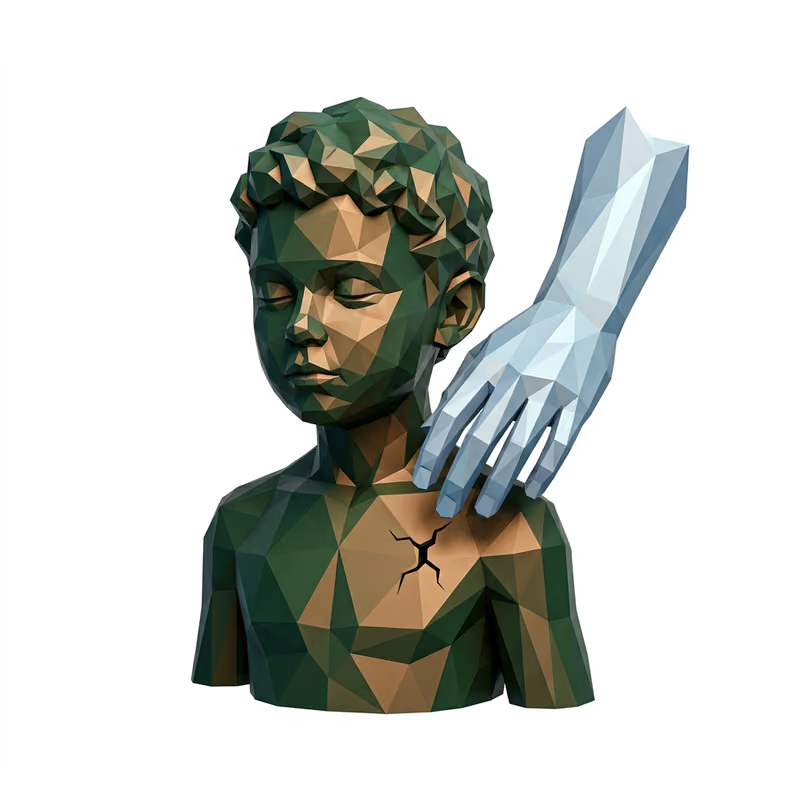
Cold Care and the Dark Triad
The specific finding that low-quality, cold, or irregular parenting is measurably linked to the manipulative, callous, entitled traits this guide's Dark Triad entry describes.
Read the entry →
The Leader's Inner Theatre
The bridge from the childhood wound to the corner office: the argument that a leader's early, unresolved family scripts get re-enacted, at scale, on the people they now manage.
Read the entry →